





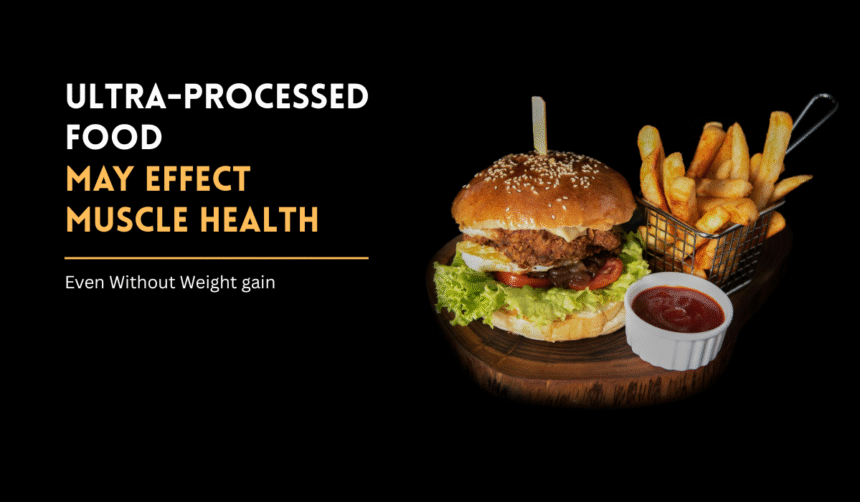

Eating ultra-processed food may affect muscle health even when a person does not gain weight, according to a new study examining the relationship between diet and fat stored inside muscles.
The findings suggest that body weight alone may not provide a complete picture of muscle health. Researchers found that people who consumed more ultra-processed food tended to have higher levels of fat infiltration in their thigh muscles, raising questions about the potential impact of everyday eating habits.
The study, published in Radiology, examined adults who were at risk of knee osteoarthritis but had no visible signs of the condition on scans.
Study Examines Fat Inside Thigh Muscles
Researchers analysed 615 adults, including 275 men and 340 women, with an average age of around 60. The participants were part of the Osteoarthritis Initiative, a research programme investigating the development of knee osteoarthritis.
Although the group was considered at risk of the condition, participants did not have radiographic evidence of knee osteoarthritis or symptoms involving their knees or hips when the data was assessed.
Researchers reviewed information about the participants’ eating habits and used magnetic resonance imaging (MRI) scans to examine the composition of their thigh muscles.
Ultra-processed food made up approximately 41 per cent of the participants’ food intake. The analysis found that those who consumed larger amounts tended to have more fat stored within their thigh muscles.
The relationship remained after researchers accounted for several factors, including calorie intake, physical activity, smoking and demographic characteristics. Body mass index and abdominal circumference were also considered.
The findings suggest that dietary habits may be associated with muscle composition independently of overall calorie consumption. However, the study does not prove that ultra-processed food directly causes muscle damage.
Why Muscle Fat Matters
Fat infiltration occurs when fat accumulates within muscle tissue. Researchers are interested in this process because changes in muscle composition may affect physical function and could be associated with the development of knee osteoarthritis.
Knee osteoarthritis is a condition that can cause pain, stiffness and difficulty moving. While excess weight is a recognised risk factor, scientists are also investigating the role of muscle quality and other health factors.
The study’s focus on adults without visible osteoarthritis allowed researchers to examine possible connections between diet and muscle composition before the condition appeared on imaging.
However, the results should be interpreted carefully. A link between ultra-processed food consumption and muscle fat does not establish that one directly causes the other.
What Counts as Ultra-Processed Food?
Ultra-processed foods are manufactured products that often contain several industrial ingredients, additives and flavourings. Examples include packaged snacks, sugary drinks, processed meats, frozen pizzas, ready-made meals and some breakfast cereals.
These products are widely available and can be convenient for people with busy schedules. Their nutritional value, however, varies depending on the ingredients and how they are prepared.
Some processed foods can provide useful nutrients, while others contain high levels of added sugar, salt or unhealthy fats. For this reason, researchers and nutrition professionals generally consider the overall dietary pattern rather than treating every processed product as equally harmful.
A diet heavily reliant on ultra-processed food may also leave less room for foods that provide protein, fibre, vitamins and minerals required for maintaining muscle health.
Study Has Important Limitations
The research was observational, meaning it examined existing dietary information and muscle composition rather than testing the effects of a controlled change in diet.
As a result, researchers cannot establish whether ultra-processed food caused the increased fat infiltration. Other factors may have contributed to the results, even though several potential influences were taken into account.
The participants also belonged to a group at risk of knee osteoarthritis. This means the findings may not apply equally to younger people or the wider population.
Further long-term research will be needed to determine whether changing dietary habits can reduce fat infiltration in muscles or influence the development of joint disease.
What the Findings Mean for Consumers
The study adds to growing research into the possible relationship between ultra-processed food, muscle quality and long-term health.
It also highlights why health assessments should consider more than body weight. People with similar weights may have differences in muscle composition, physical activity and dietary habits.
The findings do not mean that people must eliminate every processed food from their diet. Instead, they underline the importance of considering food quality, nutritional content and how frequently heavily processed products are consumed.
A balanced eating pattern can include vegetables, fruits, whole grains, legumes, nuts and suitable sources of protein. Regular physical activity, including resistance training, can also support muscle strength and function.
For now, the study provides another reason to examine everyday food choices alongside other aspects of health. Whether reducing ultra-processed food can directly improve muscle composition remains a question for future research.