



The UAE Cabinet has approved a new AI powered adviser using 32 specialised assistants as the country accelerates the use of artificial intelligence across government, education and public services.
The UAE is taking artificial intelligence deeper into government decision making with the launch of a new Cabinet AI Adviser System, designed to help ministers analyse policies, legislation and national strategies.
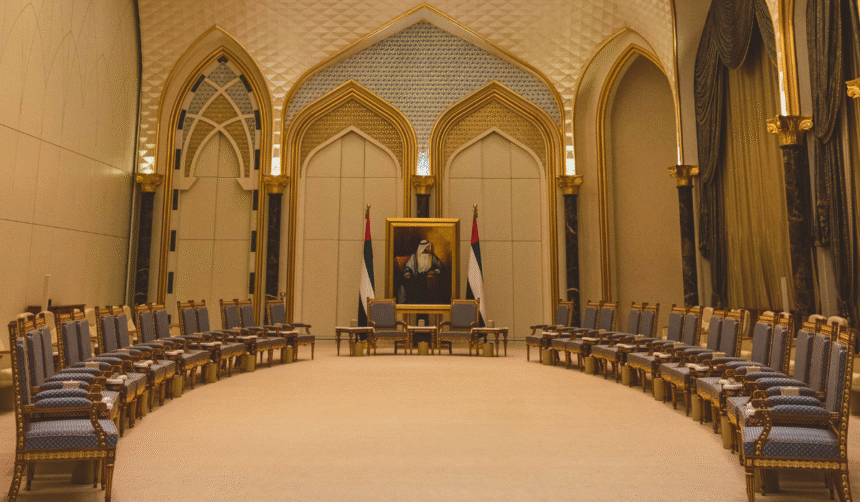
The system was approved during the first Cabinet meeting of the new government season, chaired by Sheikh Mohammed bin Rashid Al Maktoum, Vice President and Prime Minister of the UAE and Ruler of Dubai, at Qasr Al Watan in Abu Dhabi.
Powered by 32 specialised AI assistants, the new adviser will analyse government policies, legislation, strategies and systems. It will also examine their potential impact, review international best practices and provide recommendations to ministers.
AI moves closer to the heart of UAE government
Artificial intelligence is already being introduced across government services, but the Cabinet adviser represents a broader shift.
Instead of using AI only for public facing digital services, the technology will increasingly support the work happening behind the scenes, including policy analysis and government planning.
Sheikh Mohammed described the UAE Government’s AI transformation as a strategic national project and called on federal teams to play an active role in delivering it.
The final responsibility for government decisions remains with officials, but AI is increasingly becoming a tool to support the process.
Sheikh Mohammed outlines three priorities
The first Cabinet meeting of the new season also set out the government’s direction for the months ahead.
Sheikh Mohammed highlighted three main priorities, beginning with the need to maintain momentum despite changes taking place around the world.
He pointed to continued national projects, economic growth, active markets and the UAE’s ability to attract major international events.
Artificial intelligence formed the second priority. Government teams were urged to view the transition to AI as a long term transformation in how federal entities operate, rather than simply another technology upgrade.
The third message centred on trust.
Sheikh Mohammed highlighted the confidence the UAE has built through its legislation, infrastructure, international relationships and reputation, stressing the importance of protecting that trust as the country continues to develop.
UAE records more than 308 million digital transactions
The Cabinet also reviewed the progress of the UAE’s digital government transformation.
Federal entities completed more than 308 million digital transactions through 1,633 digital services over the past year.
Government applications recorded 15.8 million downloads, while customer satisfaction with priority services reached 92 per cent.
A further 471 digital transformation projects were implemented during the year.
The next phase is increasingly focused on what AI can add to that digital infrastructure, both for people using government services and the teams responsible for delivering them.
22,000 teachers to receive AI training
Education is also becoming an important part of the UAE’s AI plans.
The Cabinet reviewed a programme that will provide artificial intelligence training to 22,000 teachers and education professionals.
Educators will learn how AI assistants can support tasks such as lesson planning, assessments and curriculum analysis. The programme will also explore how the technology can be used to encourage creativity and innovation among students.
The UAE has already developed an AI curriculum across different stages of education.
A mechanism has now been approved to make the country’s experience with that curriculum available to education ministries in other countries.
The initiative recognises that preparing students for an AI driven future also requires teachers to understand how the technology can be used effectively in classrooms.
National Ecotourism Policy approved
The Cabinet meeting extended beyond technology, with ministers also approving the National Ecotourism Policy and reviewing progress under the National Strategy to Combat Desertification 2022-2030.
The UAE now has 55 nature reserves, while approximately 4,900 hectares of land have been rehabilitated.
More than 3.2 million square metres of green space have been added, and around 341,000 native trees have been numbered and protected.
The measures are intended to strengthen environmental protection while supporting sustainable tourism and preserving natural areas.
UAE Government Annual Meetings set for November
The Cabinet also approved the agenda for the UAE Government Annual Meetings, scheduled for November 8 to 10.
This year’s discussions will focus on national readiness and resilience, including the economy, logistics, supplies, resources and families.
The progress of federal entities in adopting AI assistants across their services and operations will also be reviewed.
The new Cabinet AI Adviser offers an early picture of what that transformation could look like.
With 32 specialised AI assistants supporting policy analysis, recommendations and follow up, artificial intelligence is moving beyond individual digital services and into the day to day workings of government.
For the UAE, the focus is increasingly shifting from simply adopting AI to finding practical ways for the technology to support faster, better informed and more efficient government.