

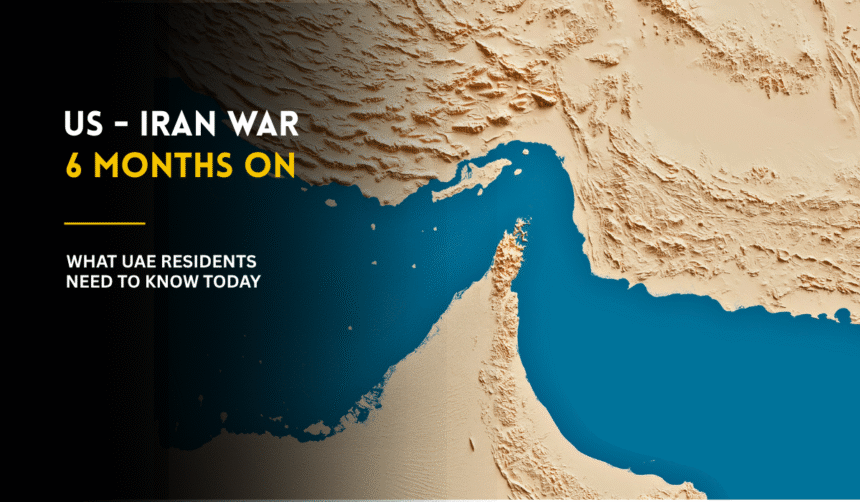
Six months into the US-Iran war, the situation across the Gulf remains unsettled. There have been some encouraging diplomatic developments, but several of the issues that have affected the region since the conflict began are far from resolved.
For people living in the UAE, attention remains firmly on the Strait of Hormuz, regional air travel and the wider economic impact of a war that has stretched into its seventh month.
One noticeable change has come from US diplomatic missions in the Gulf, where some of the restrictions introduced earlier in the conflict are beginning to ease.
US diplomats return to parts of the Gulf
American diplomats and some family members have started returning to US embassies in parts of the Middle East after months of tighter security measures.
Restrictions have been eased in Qatar, Kuwait and Bahrain, allowing diplomatic staffing to gradually return to more normal levels.
It is a small but significant shift. The decision does not suggest that security concerns across the region have disappeared, but it does point to greater confidence than during the earlier stages of the war.
Diplomatic efforts are continuing at the same time.
Iran has signalled that negotiations could still be possible if Washington changes its approach to the pressure campaign, while Qatar and Oman remain involved in efforts to bring the two sides closer to talks.
For now, those efforts have yet to produce an agreement capable of ending the conflict.
Strait of Hormuz remains a major concern
Much of the Gulf’s attention is still focused on the Strait of Hormuz.
The narrow waterway is one of the world’s most important shipping routes and normally carries a significant share of global energy supplies. Its disruption has been one of the most serious economic consequences of the war.
Iran and Oman have discussed proposals for a temporary shipping corridor, along with efforts to clear mines and make navigation safer. Technical discussions have continued, although no temporary or permanent corridor has yet been established.
Tehran has also maintained that the strait will not fully reopen while the war continues.
For the UAE, what happens there matters well beyond the energy sector.
Longer shipping journeys, higher insurance premiums and greater security risks can raise the cost of moving goods around the region. Those costs can eventually reach businesses and consumers through freight charges, supply-chain delays and more expensive imports.
As a major global centre for logistics, trade and energy, the UAE has a strong interest in seeing normal maritime traffic restored.
Maritime tensions continue
The pressure at sea is not limited to the Strait of Hormuz itself.
US Central Command says 82 commercial vessels have been redirected as part of American enforcement efforts, according to Gulf News.
There have also been incidents involving commercial ships near the region.
A tanker was reportedly struck by an unidentified projectile near Oman earlier this week, damaging its engine room and leaving the vessel disabled. The crew was reported to be safe.
Incidents like these matter to the UAE because uncertainty at sea can quickly affect shipping schedules, insurance costs and the movement of goods through Gulf ports.
They are also a reminder that while diplomatic discussions continue, the maritime situation remains unpredictable.
What is happening with UAE flights?
For passengers in the Emirates, air travel has become one of the most visible ways the conflict has affected everyday life.
Flights continue to operate from UAE airports, although airlines have had to adjust some services as regional airspace conditions change.
Emirates, Etihad Airways, flydubai and Air Arabia have all navigated months of disruption, changing routes and schedules when necessary.
There are signs that the worst of the aviation disruption may be easing. Gulf airlines and airports have shown resilience throughout the crisis, while passenger confidence within the region has gradually improved.
That does not mean travellers should assume every journey will operate exactly as scheduled.
Anyone flying from the UAE, particularly on routes passing close to affected areas, should check directly with their airline before leaving for the airport. Last-minute changes remain possible when security or airspace conditions shift.
Economic pressure continues to grow
The conflict is also being fought far beyond the battlefield.
Washington has continued imposing sanctions and financial restrictions on Iran and organisations accused of helping Tehran maintain access to international financial networks.
That creates another issue for companies operating across the Gulf.
UAE businesses involved in shipping, international payments, imports or exports need to pay close attention to changes in sanctions and compliance requirements, particularly when transactions involve markets or organisations affected by US restrictions.
For most residents, however, ordinary banking and commercial activity in the UAE continues as usual.
What should UAE residents know now?
For most people living in the Emirates, there is no need to change everyday routines simply because the war has reached the six-month mark.
There are, however, practical reasons to keep following developments.
Travellers should check their flight status before heading to the airport. Businesses exposed to international shipping or payments should watch developments around the Strait of Hormuz and new sanctions. Residents should also be cautious about claims circulating on social media, particularly reports of attacks, airport closures or security incidents that have not been confirmed by official sources.
After six months of conflict, there are some signs of easing around the Gulf. The return of diplomats and continuing discussions over maritime access suggest that efforts to reduce tensions have not stopped.
But the biggest questions remain unanswered.
The Strait of Hormuz has yet to return to normal, the risk of further disruption remains and there is still no political agreement capable of bringing the war to an end.
For UAE residents, life continues much as usual. But with conditions capable of changing quickly, keeping an eye on official travel and security updates remains the sensible approach.