

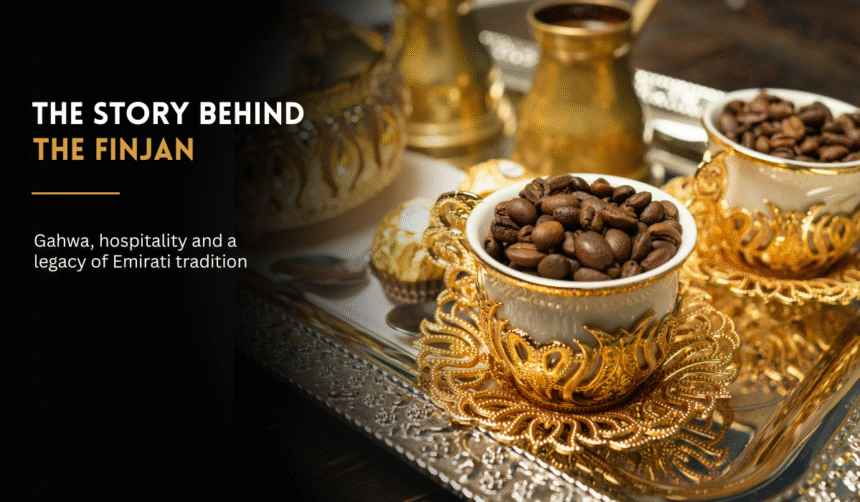
In the UAE, a finjan of Arabic coffee is rarely just a drink. It is a welcome, a gesture of respect and, in many homes, the beginning of a conversation.
That tradition is being brought to life at ADIHEX 2026 in Abu Dhabi, where visitors can discover the coffee once prepared for the late Sheikh Zayed bin Sultan Al Nahyan.
At its pavilion in Hall 5 of ADNEC Centre Abu Dhabi, the Founder’s Office is sharing Sheikh Zayed’s documented gahwa recipe, offering a fascinating glimpse into life inside the Founding Father’s majlis.
The story goes beyond how Sheikh Zayed liked his coffee. It reflects the hospitality, generosity and connection that surrounded the majlis values that remain deeply rooted in Emirati culture today.
Recreating Sheikh Zayed’s coffee
To piece together Sheikh Zayed’s preferred gahwa, the Founder’s Office drew on historical research and the memories of people who had actually prepared and served coffee in his majlis.
Among them were coffee makers whose experience stretched from 1966 to 2004. Their recollections helped preserve details that could easily have disappeared over time, from the ingredients used to the way the beans were roasted and the coffee served.
Those memories also offer a glimpse into Sheikh Zayed’s majlis itself.
It welcomed dignitaries and government officials, but members of the community also came to talk, listen and share their concerns. Through many of those conversations, there was gahwa quietly poured as discussions unfolded and guests came and went.
How Sheikh Zayed’s gahwa was made
The documented recipe begins with Ceylon coffee beans.
The beans were cleaned, washed and left to dry in the sun for at least two days. They were then roasted over charcoal for no less than 30 minutes, until they developed a deep reddish colour, before being finely ground.
For one litre of water, two finjan-sized measures of ground coffee were used.
The coffee was added to boiling water with two to four cloves and a pinch of saffron. After boiling for around 10 minutes, it was strained into a smaller serving dallah containing a capful of rose water.
The result was an aromatic gahwa carrying the flavours and scents of roasted coffee, cloves, saffron and rose water.
Sheikh Zayed also enjoyed his coffee with dates, traditionally eaten in odd numbers of three or more.
These details may appear simple, but together they preserve an intimate part of everyday life around the Founding Father.
The unspoken language of a finjan
Across the UAE, serving gahwa comes with an etiquette of its own.
Coffee is poured into a small, handleless cup known as a finjan. Rather than filling it to the top, the server pours only a small amount, leaving the guest free to accept another serving.
Who receives the first cup matters too. Traditionally, an elder or honoured guest is served first, and coffee is offered and received with the right hand.
There is also a simple way to say you have had enough.
A guest gently shakes the finjan before returning it to the server. Without that small gesture, another serving may follow.
But together they form an unspoken conversation between host and guest, built around courtesy, generosity and respect.
Why gahwa remains important in the UAE
Gahwa has been part of Emirati homes and majlis gatherings for generations.
The dallah, the distinctive pot used to prepare and serve Arabic coffee, has become one of the UAE’s most recognisable cultural symbols. Its image can even be found on the country’s one-dirham coin.
The tradition has also gained international recognition. In 2015, Arabic coffee was inscribed on UNESCO’s Representative List of the Intangible Cultural Heritage of Humanity.
Yet its significance is perhaps best understood when someone places a finjan in your hand.
The aroma of the coffee, the arrival of the dallah and that first small pour immediately signal hospitality. Traditionally, even preparing the beans contributed to the atmosphere, as coffee was roasted and ground by hand before guests were served.
For many Emirati families, these customs are not simply traditions preserved for heritage events. They remain part of gatherings, celebrations and everyday hospitality.
One small cup, generations of meaning
The UAE has changed enormously since the days when coffee was routinely roasted over charcoal fires. Homes have evolved, preparation methods have changed and the country has grown into a modern global centre.
Yet offering someone a finjan of gahwa still carries much the same message.
That is what makes preserving Sheikh Zayed’s recipe meaningful. It does more than recreate the flavour of a coffee served decades ago. It keeps alive a personal detail from the Founding Father’s life while highlighting a tradition that continues in Emirati homes today.
A finjan may be small, but the story behind it is much bigger one of welcome, respect and generosity, passed from one generation to the next, one cup at a time.