




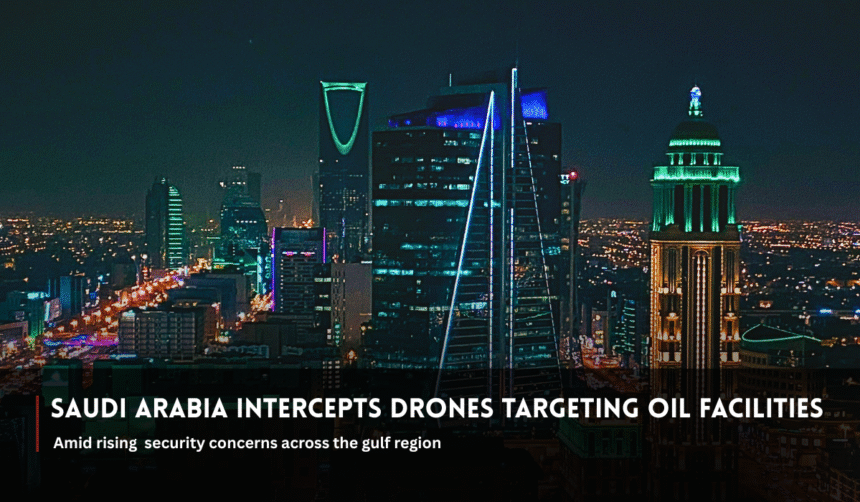
Saudi Arabia has intercepted drones that were heading towards areas linked to the kingdom’s petroleum infrastructure, authorities said, as security concerns continue to grow across the Gulf region.
The incident comes amid heightened tensions in the Middle East, with several countries closely monitoring developments involving regional security, energy infrastructure, and diplomatic efforts aimed at preventing further escalation.
Saudi authorities said the drones were detected and destroyed before reaching their intended targets. No casualties or major damage to oil facilities were reported following the interception.
The latest development has once again highlighted the importance of protecting critical energy infrastructure in a region that plays a major role in global oil supplies.
Saudi Air Defences Respond to Drone Threat
Saudi Arabia’s air defence systems remain a key part of the kingdom’s efforts to protect strategic locations, including energy facilities and major economic assets.
The country has previously faced security threats involving unmanned aircraft and missile attacks during periods of regional instability. In response, Saudi Arabia has continued strengthening its defence capabilities and improving monitoring systems.
The interception of the drones shows the continued security challenges facing Gulf countries as they work to protect important infrastructure from potential threats.
Gulf Security Concerns Increase
The reported drone activity has raised wider concerns about regional stability and cross-border security risks.
Gulf nations have repeatedly emphasised the need for cooperation to prevent attacks and maintain security across the region. Protecting energy facilities, transportation networks, and commercial routes remains a major priority for governments.
The incident also comes at a time when countries across the Middle East are closely watching developments linked to ongoing political and security tensions.
Oil Infrastructure Remains a Global Priority
Saudi Arabia’s petroleum sector is one of the most important components of the global energy market. Any threat involving oil production or export facilities can attract international attention because of its possible impact on energy supplies.
The kingdom is among the world’s leading oil producers, and maintaining stable operations at its facilities is essential for both regional and global markets.
Energy analysts and investors continue to monitor developments in the Gulf, particularly any events that could affect production, transportation, or supply chains.
Markets Watch Middle East Developments
Oil markets often react quickly to security developments in major energy-producing regions.
Recent diplomatic efforts and signs of reduced tensions have provided some relief to markets, but uncertainty remains due to ongoing security concerns.
Investors continue assessing the situation while governments work to maintain stability and prevent disruptions that could affect international trade and energy prices.
Strait of Hormuz Draws Attention
The security of the Strait of Hormuz remains a major concern for the global energy sector.
The waterway is one of the world’s most important routes for oil and gas shipments, connecting energy producers in the Gulf with international markets.
Any disruption in the area could create challenges for global supply chains and increase pressure on energy markets.
For this reason, regional governments continue focusing on maritime security and maintaining safe trade routes.
Diplomatic Efforts Continue Across Region
The drone interception took place as international and regional leaders continued efforts to manage rising tensions in the Middle East.
Diplomatic discussions have focused on reducing risks, preventing further escalation, and maintaining stability across the region.
However, security challenges remain, with governments continuing to monitor developments closely and prepare for possible threats.
Saudi Arabia Focuses on National Security
For Saudi Arabia, protecting its territory and economic infrastructure remains a key priority.
The kingdom has continued investing in security systems designed to detect and respond to potential threats while ensuring the continued operation of important sectors.
The latest incident highlights the challenges faced by countries in a region where security and energy interests are closely connected.
Future Outlook for Gulf Stability
The situation remains closely monitored as regional and international actors assess the impact of recent developments.
Saudi Arabia’s response, along with broader diplomatic efforts, will influence how the situation develops in the coming days.
For Gulf countries, maintaining security, protecting infrastructure, and supporting regional stability will remain central priorities as the Middle East continues to navigate a period of uncertainty.