






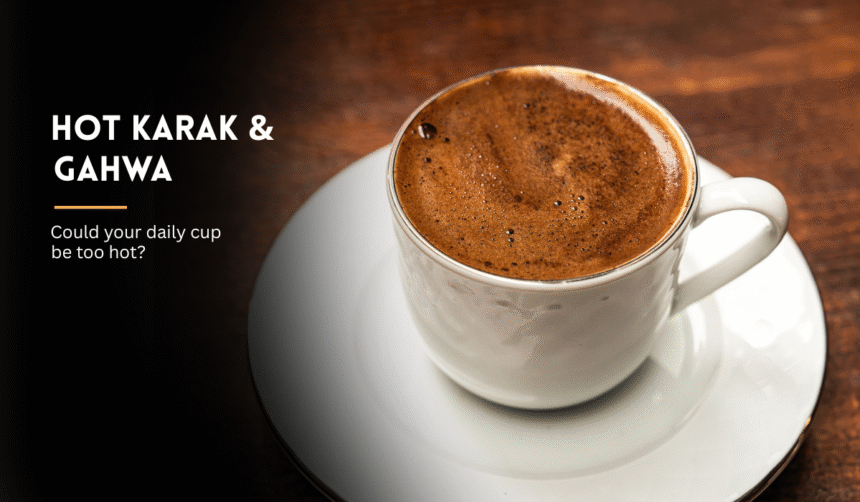

New research has linked very hot beverages with a higher risk of oesophageal cancer, prompting doctors to advise people to let their drinks cool before taking a sip.
UAE residents who regularly enjoy steaming cups of karak, gahwa, tea or coffee are being advised to pay closer attention to how hot their drinks are, following research linking very hot beverages with an increased risk of oesophageal cancer.
The concern is not the drink itself, but the temperature at which it is consumed.
Research led by scientists from the University of Oxford found that people who regularly consumed tea or coffee at 65°C or above had around three times the risk of developing oesophageal cancer compared with those who preferred their drinks at lower temperatures.
The research, published in the International Journal of Cancer, followed around one million middle-aged men and women in the UK for approximately 14 years. A higher risk was also observed among people who consumed six or more hot beverages a day.
For the UAE, where karak and gahwa are woven into daily routines and hospitality, the findings bring attention to a simple precaution: allowing a freshly prepared drink to cool before consuming it.
Temperature Is the Concern, Not Karak or Gahwa
Doctors stress that the findings should not be interpreted as a reason to stop drinking tea or coffee.
Instead, the concern centres on repeatedly exposing the oesophagus to liquids at very high temperatures.
Dr Anu Susan George, a consultant in medical oncology at Medcare, explained that repeated exposure to extremely hot liquids can cause thermal injury to the lining of the oesophagus. Over time, recurring irritation and inflammation may contribute to changes in the tissue.
Dr Tarek AlKhouri, chief medical oncologist at the Advanced Care Oncology Center in Dubai, has also highlighted the potential effects of regularly consuming beverages at very high temperatures.
The oesophagus is the muscular tube that carries food and liquids from the mouth to the stomach. A drink that feels painfully hot on the lips or tongue can also expose tissues further down the digestive tract to high temperatures.
Let Your Drink Cool Before Drinking
For people who enjoy karak, gahwa or coffee several times a day, reducing that exposure does not require abandoning the habit.
Doctors recommend allowing freshly prepared beverages to cool before drinking them.
A practical rule is simple: if the drink feels hot enough to burn your lips or tongue, wait before taking a sip.
Leaving a freshly prepared cup to stand for a few minutes can reduce its temperature and make it more comfortable to drink.
The advice may be particularly relevant for people who consume several hot beverages throughout the day and routinely begin drinking them while they are still steaming.
Other Oesophageal Cancer Risks Matter
Beverage temperature is only one factor associated with oesophageal cancer.
Other recognised risk factors include tobacco use, excess body weight and persistent acid reflux. Smoking and other forms of tobacco exposure can also contribute to cancer risk.
Allowing tea or coffee to cool should therefore be considered one practical precaution rather than a way of preventing the disease on its own.
Avoiding tobacco, maintaining a healthy weight and seeking medical advice for persistent reflux or other ongoing digestive problems remain important measures for long-term health.
Warning Signs Should Not Be Ignored
Oesophageal cancer may not always produce obvious symptoms in its early stages.
One of the main warning signs is difficulty swallowing, particularly when the problem persists or gradually becomes worse.
Other possible symptoms can include pain while swallowing, feeling as though food is stuck in the throat or chest, unexplained weight loss, persistent indigestion or acid reflux, repeated vomiting, and ongoing discomfort in the chest or upper abdomen.
These symptoms can be caused by many conditions and do not necessarily indicate cancer. However, persistent or worsening symptoms should be assessed by a healthcare professional.
A Simple Change for UAE Tea and Coffee Drinkers
Karak and gahwa hold a familiar place in UAE life. Karak is widely consumed across the country, while Arabic coffee remains closely connected with Emirati hospitality and social traditions.
The latest findings do not suggest those traditions need to change. Instead, they highlight the potential importance of temperature.
For people who regularly reach for a freshly poured cup, waiting a little longer before the first sip may be one of the simplest adjustments they can make.
The message from doctors is straightforward: enjoy the karak, gahwa or coffee, but avoid drinking it while it is extremely hot.
In a country where offering a hot drink is part of everyday hospitality, allowing the cup to cool slightly could turn a small change in routine into a sensible long-term health precaution.