

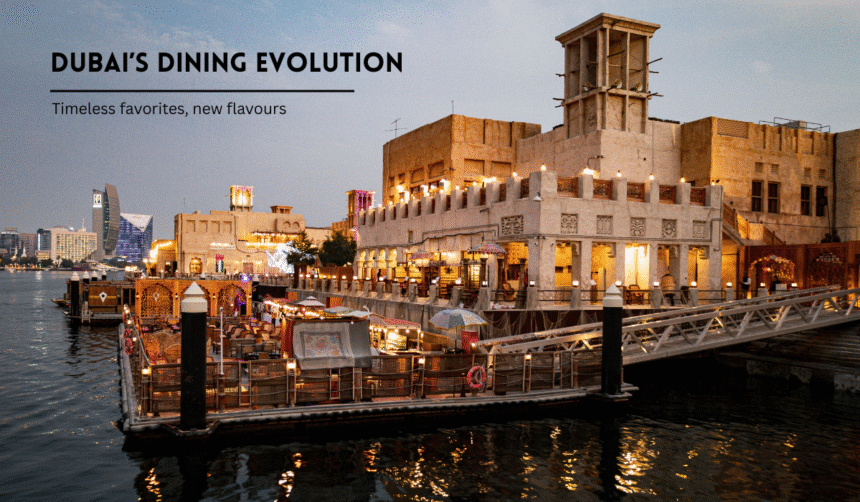
Dubai has always loved a new restaurant. There is usually another international name arriving, an ambitious concept opening its doors or a familiar favourite entering a new chapter.
Right now, however, the city’s dining scene is interesting for both what is arriving and what has managed to last.
Some of Dubai’s best-known restaurants are updating their spaces and introducing different experiences, while acclaimed names from London and elsewhere continue to arrive. For diners, the choice is increasingly between returning to an old favourite and discovering the place everyone is talking about next.
Scalini Dubai Gets a New Look
Scalini is hardly a newcomer, but its latest chapter brings something different.
The Sheikh Zayed Road restaurant reopened in September following a major renovation, introducing a brighter Mediterranean-inspired setting. Blue and yellow tones, striped fabrics and a veranda dotted with citrus trees give the space a relaxed coastal feel.
The food remains rooted in the Italian cooking that built its following. Executive Chef Francesco Cortorillo’s menu includes red prawn crudo, tableside beef tartare and Nerano-style linguine with fried zucchini and Provolone del Monaco.
The changes are mostly about the setting rather than the restaurant’s identity, giving regulars something different without moving too far from what they already know.
Dubai Favourites Keep Evolving
In a city where restaurants open constantly, staying relevant for years is an achievement.
Zuma Dubai has spent 18 years in the city and remains one of its most recognisable dining names. Its offering now stretches from the weekday Ebisu Business Lunch to the Saturday Baikingu Brunch and Yashoku evenings.
COYA Dubai at Four Seasons Resort Dubai at Jumeirah Beach continues to build around its Peruvian identity. Familiar ceviches and Chilean sea bass rice sit alongside a cocktail programme inspired by Peru’s landscapes.
Mimi Kakushi has also experimented with its weekend experience, pairing Japanese food with entertainment and changing brunch collaborations.
For established restaurants, reputation may bring people through the door, but giving them reasons to return is what matters.
Gymkhana Arrives in Dubai
Few recent openings carry the expectations surrounding Gymkhana.
The acclaimed London restaurant, which holds two Michelin stars, opened its first UAE location in DIFC’s Gate Village in early September.
Spread across two levels and a terrace, the restaurant has space for 137 diners. Its design takes inspiration from Indian social clubs, with intimate dining areas, lantern lighting and a lower-level bar.
Several dishes associated with the London restaurant have travelled to Dubai, including aloo chaat, tandoori masala lamb chops, kid goat methi keema and chicken butter masala.
There are also dishes created specifically for Dubai, giving the restaurant room to develop a local identity rather than simply reproducing its London formula.
Yù & Mì Brings Hong Kong to Dubai
Yù & Mì takes diners somewhere entirely different.
Located on the 36th floor of Mandarin Oriental Downtown Dubai in Wasl Tower, the restaurant combines Cantonese and Sichuan cooking with a cocktail bar influenced by 1960s Hong Kong.
Peking duck is served tableside, while king crab xiao long bao and dim sum also feature on the menu. Tea and baijiu have a prominent place in the drinks programme.
Executive Chinese Chef Yang Guojian leads the kitchen, while Jade Lee oversees the dim sum offering.
It fits neatly into Dubai’s appetite for restaurants where design, atmosphere and drinks are considered as carefully as the food.
More Dubai Restaurants Are Coming
There is little sign of the pace slowing.
Rocambolesco is scheduled to open in Uptown Dubai on September 25, bringing another contemporary Italian concept to the city.
Executive Chef Luigi Stinga will lead the kitchen. The first stage includes a ground-floor dining room, terrace and bar, with a more intimate dining space planned later.
Other international names are also settling in. MiMi Mei Fair has brought its theatrical Mayfair concept to Dubai’s Opera District, while London’s Barrafina chose DIFC for its first international location.
Each arrives with a recognisable identity, but success elsewhere does not automatically guarantee a lasting place in Dubai’s competitive restaurant market.
Dubai Dining Balances Old and New
The contrast between established favourites and high-profile newcomers says plenty about the way Dubai’s dining scene has developed.
Restaurants such as Zuma have spent years building loyal local audiences. New arrivals such as Gymkhana enter with international recognition but still have to prove themselves to diners in the city.
That creates a market where reputation can generate attention, but consistency is what builds longevity.
For diners, the competition works in their favour. They can return to restaurants that have become part of Dubai’s dining history or try international names beginning their own story in the city.
In a market with so much choice, both have to earn the next reservation.