





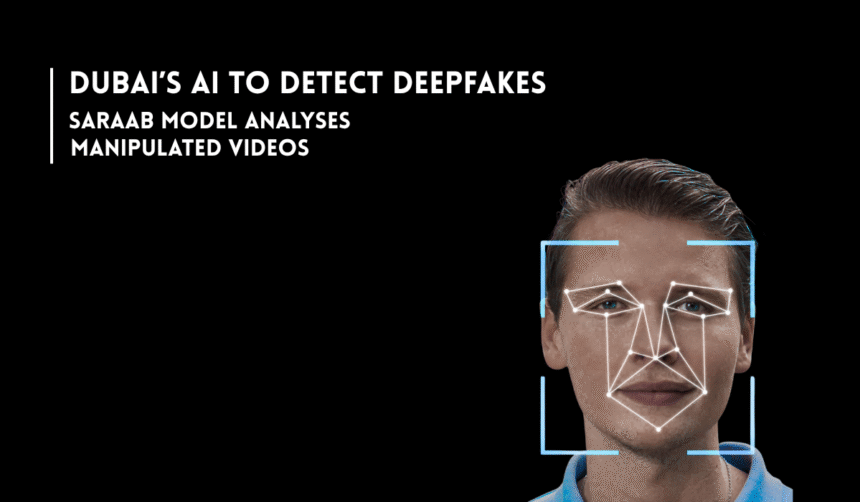
Dubai has unveiled SARAAB, an open-source artificial intelligence model developed to detect deepfake videos, adding a locally built tool to the emirate’s growing cybersecurity capabilities.
The model was developed by an Emirati team at the Dubai Electronic Security Centre (DESC) and was unveiled during GISEC Global 2026, being held from September 16 to 18 at the Dubai Exhibition Centre, Expo City Dubai.
SARAAB Designed to Detect Manipulated Videos
SARAAB is designed to identify digitally manipulated video content, an increasingly important challenge as artificial intelligence makes fabricated footage more realistic and harder to distinguish from genuine recordings.
The system examines facial features in videos to detect signs of manipulation. It can also generate a heat map showing areas that may have been altered, giving users a visual indication of where potential deepfake activity has been detected.
Unlike systems that examine individual frames, SARAAB can analyse video footage across its full duration. This allows it to identify manipulation that may occur only during particular sections of a recording.
DESC has reported an accuracy rate of 91 per cent for the model and said it is expected to be launched by the end of 2026.
Open Source Access for Developers and Researchers
A major feature of SARAAB is its open-source design. The model is set to be made available through developer platforms, including Hugging Face, giving AI engineers, cybersecurity specialists and researchers access to the technology.
The open-source approach allows specialists to examine the model, test its capabilities and explore potential applications for detecting manipulated media. It also creates opportunities for further development as deepfake techniques continue to evolve.
The project was developed in response to concerns raised by government entities about the potential misuse of deepfake technology. DESC has been working on SARAAB for around six months.
Addressing the Growing Deepfake Threat
Deepfakes can be used to create convincing but fabricated videos involving public figures, individuals or organisations. Such content can potentially be used in misleading advertisements, impersonation, misinformation and other forms of digital deception.
The growing sophistication of generative AI has increased the need for tools that can distinguish authentic footage from manipulated material. SARAAB is intended to support that effort by providing a detection system developed within Dubai’s government cybersecurity ecosystem.
DESC Announces Three Cybersecurity Initiatives
SARAAB was one of three initiatives presented by DESC at GISEC Global 2026. The centre also unveiled the Dubai Cyber Skills Framework, which establishes a common reference for cybersecurity skills, qualifications, certifications, training and career development.
The framework is aimed at cybersecurity professionals as well as employers, educational institutions and training providers. It is designed to help create a more consistent approach to developing and assessing cybersecurity expertise.
DESC also introduced the ISR Auditor Certification Programme for professionals involved in auditing compliance with Dubai’s Information Security Regulation. The programme focuses on creating a consistent approach to auditing and evaluating evidence.
The three initiatives highlight different aspects of Dubai’s cybersecurity strategy, from developing specialist skills to strengthening information-security oversight and building new technological capabilities.
For SARAAB, the emphasis is not only on detecting manipulated videos but also on making the technology accessible to the wider technical community. By opening the model to researchers and developers, DESC is allowing specialists to test and build on a locally developed deepfake detection system.
As AI-generated video becomes increasingly sophisticated, the ability to identify manipulated footage is becoming an important part of digital security. SARAAB represents Dubai’s latest effort to address that challenge through home-grown AI and wider collaboration with the cybersecurity and research community.