






Washington targets an Iran linked cryptocurrency network over alleged financial transfers and payments connected to the Strait of Hormuz.
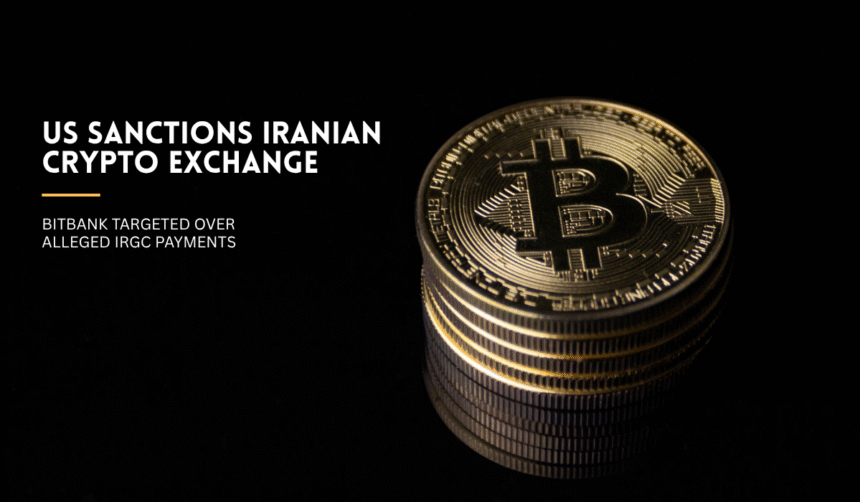
The United States has sanctioned Iranian cryptocurrency exchange BitBank, accusing it of facilitating financial transfers linked to Iran’s Islamic Revolutionary Guard Corps (IRGC) and payments associated with maritime activities in the Strait of Hormuz.
The action, announced by the US Treasury Department, adds to Washington’s efforts to restrict Iran’s access to international financial networks and disrupt transactions involving sanctioned organisations.
BitBank Faces US Sanctions
The Treasury’s Office of Foreign Assets Control (OFAC) identified Iranian financier Babak Zanjani as the controller of BitBank. Zanjani has previously faced US sanctions over alleged involvement in financial networks connected to Iran’s oil trade and sanctions evasion.
The latest designation also targets Pishtaz Simorgh Electronic Trade Company, which the Treasury identified as BitBank’s software developer.
Three individuals associated with Zanjani Hossein Ali Zaker Hossein, Mohammad Mahdi Zaker Hossein and Seyed Adel Heidari were also included in the sanctions announcement.
The measures generally block property and interests in property belonging to designated parties that fall under US jurisdiction. US persons are also restricted from conducting transactions with the sanctioned targets, subject to applicable exemptions and authorisations.
Alleged Transfers to the IRGC
According to the US Treasury, BitBank transferred hundreds of millions of dollars in digital assets to the IRGC.
The Revolutionary Guard is a major Iranian military and security organisation that has faced extensive US sanctions. Washington has repeatedly targeted financial networks it alleges provide funding or services to the group.
The allegations against BitBank highlight the use of cryptocurrency in cross-border financial activity. Digital assets can facilitate transfers between parties in different countries, although cryptocurrency transactions can also be tracked and investigated through blockchain analysis and financial compliance systems.
The Treasury’s allegations concern the named platform and associated individuals. They do not mean that all cryptocurrency exchanges or ordinary digital asset users are involved in prohibited activity.
Payments Linked to the Strait of Hormuz
The US allegations also involve Hormuz Safe, an Iranian maritime insurance and shipping-services platform previously sanctioned by Washington.
Treasury said BitBank was used by Hormuz Safe to process payments collected from vessels seeking safe passage through the Strait of Hormuz.
The waterway is a major international shipping route connecting the Persian Gulf with the Gulf of Oman. Its importance to energy transportation makes shipping-related financial activity in the region a significant area of international scrutiny.
By targeting the alleged payment network, US authorities are seeking to disrupt financial channels they say support Iran-linked maritime operations and IRGC-related activities.
Growing Scrutiny of Crypto Networks
The sanctions against BitBank follow earlier US actions involving businesses associated with Zanjani.
In January, the Treasury sanctioned Zedcex Exchange Limited and Zedxion Exchange Limited, alleging that the platforms supported money laundering connected to the IRGC. In July, Washington also targeted additional companies linked to Zanjani across Iran, Turkey and the United Arab Emirates.
The measures demonstrate the risks cryptocurrency businesses can face when authorities suspect their services are being used in transactions involving sanctioned entities.
For international exchanges, the action highlights the importance of sanctions screening, customer verification and monitoring of potentially high-risk transactions. Platforms operating across jurisdictions may face financial and legal restrictions if they are accused of facilitating prohibited dealings.
The sanctions do not constitute a general US ban on cryptocurrency. Instead, they focus on specified individuals, companies and transactions covered by US sanctions rules.
The BitBank case illustrates how Washington is extending financial enforcement efforts into the digital asset sector. Its allegations concerning IRGC-linked transfers and Hormuz-related payments place cryptocurrency networks within the wider dispute over Iran’s access to international finance.
As US authorities continue targeting Iran-linked financial channels, cryptocurrency exchanges and businesses involved in cross-border transactions are likely to face increased attention over compliance and sanctions exposure.