




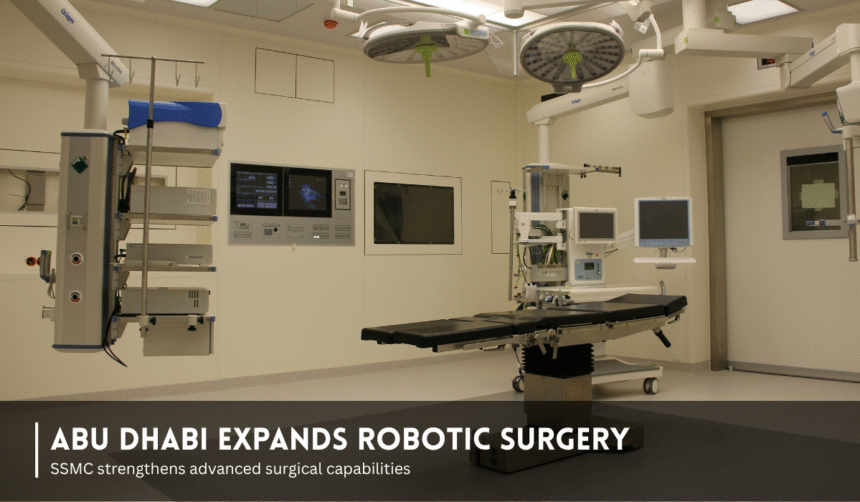

Sheikh Shakhbout Medical City (SSMC) in Abu Dhabi has expanded its robotic surgery programme, completing more than 1,260 robotic-assisted procedures since 2020 as the technology is adopted across a wider range of surgical specialties.
The hospital now performs more than 500 robotic procedures annually, compared with just four procedures using a single robotic system when the programme was launched six years ago.
Activity has continued to rise in 2026. SSMC recorded a 42% increase in robotic-assisted procedures during the first half of the year compared with the same period in 2025.
The expansion includes additional robotic systems, new procedures and specialist training for surgical teams.
Robotic Procedures Rise in 2026
SSMC performed 131 robotic procedures in the first quarter of 2026, compared with 87 during the corresponding period last year.
A further 161 procedures were carried out between April and June, up from 119 in the second quarter of 2025.
The increase reflects the growing use of robotic-assisted techniques within the hospital, where the technology is now available across several areas of surgery.
More Specialties Use Robotic Systems
Robotic technology at SSMC is used across thoracic surgery, urology, oncology, orthopaedics, neurosurgery and general surgery.
The hospital has also introduced specialised procedures, including single-port robotic thoracic sympathectomy, which can be used to treat selected patients with hyperhidrosis, a condition characterised by excessive sweating.
Emergency robotic urology procedures have also been introduced for certain urgent and complex cases.
Robotic-assisted surgery allows surgeons to control specialised instruments during minimally invasive procedures. For suitable patients, this can allow operations to be performed through smaller incisions.
Depending on the procedure and individual case, minimally invasive surgery may help limit tissue damage, shorten hospital stays and support recovery.
However, the use of robotic surgery is determined by clinical assessment and is not appropriate for every patient or operation.
Hospital Adds More Robotic Equipment
SSMC has increased the number of robotic systems available as the programme has grown.
The hospital currently operates four robotic systems supporting general surgery, as well as two platforms dedicated to orthopaedic procedures.
A separate robotic system for neurosurgery was acquired in 2026, extending the technology into another specialist area.
The investment has been accompanied by training for surgeons and other clinical staff.
All of SSMC’s bariatric and thoracic surgeons have received training in advanced robotic procedures, while around 80% of its general surgeons are trained in advanced robotic surgery.
Internationally trained surgeons are also involved in leading the programme.
Focus on Complex Surgical Care
Dr Marwan Al Kaabi, chief executive officer of SSMC, said the expansion reflects the work of the hospital’s multidisciplinary teams and its focus on innovation and clinical excellence.
Robotic systems can provide surgeons with an additional option for selected complex operations, particularly when precision or access to difficult-to-reach areas is an important consideration.
Despite the term “robotic surgery”, the system does not perform an operation independently. The surgeon remains in control, directing the robotic instruments throughout the procedure.
The decision to use the technology depends on the patient’s condition, the type of operation required and an assessment by the medical team.
The programme forms part of SSMC’s wider development of specialist surgical services in Abu Dhabi.
Training Supports Robotic Surgery Growth
Alongside investment in equipment, SSMC is using its training facilities to develop expertise in robotic and other advanced surgical techniques.
The SSMC Training Academy provides education, specialist training and knowledge-sharing opportunities for healthcare professionals.
Training is an important part of robotic surgery because the technology requires surgeons and supporting clinical teams to develop specific skills and experience.
As robotic systems are introduced across more specialties, the hospital’s training programmes are intended to support the safe use of the technology and the development of new surgical capabilities.
Robotic Surgery Becomes an Established Service
Since launching its programme in 2020, SSMC has moved from a small number of initial procedures to routinely using robotic technology across several surgical specialties.
The hospital’s expansion in 2026 includes a new neurosurgery system, continued growth in procedure numbers and a larger group of surgeons trained to use robotic platforms.
The programme also now covers procedures ranging from planned general and thoracic surgery to selected emergency urology cases.
For SSMC, the continued investment reflects a broader shift towards incorporating robotic-assisted techniques into specialist surgical care where they are considered clinically appropriate.
As the technology becomes more widely available, patient selection and specialist expertise will remain central to determining when robotic-assisted surgery is used.