





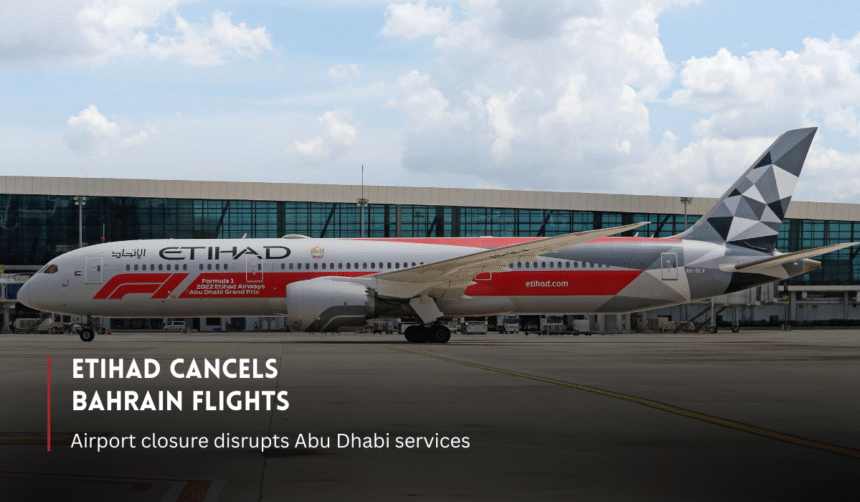
Etihad Airways cancelled two scheduled flights between Abu Dhabi and Bahrain on Thursday after a temporary closure of Bahrain International Airport forced one of its aircraft to return to Abu Dhabi, highlighting how rising regional tensions continue to affect air travel across the Gulf.
Early Flight Forced to Return
Etihad flight EY647 departed Zayed International Airport in Abu Dhabi for Bahrain in the early hours of July 16. However, the aircraft was forced to return to Abu Dhabi after Bahrain International Airport temporarily suspended operations.
Following the disruption, Etihad cancelled both the outbound EY647 service from Abu Dhabi to Bahrain and the return EY648 flight from Bahrain to Abu Dhabi. Flight-tracking websites and airport departure boards later confirmed that both services had been cancelled rather than delayed.
The airline’s decision was taken as a precaution while airport operations and regional airspace conditions were being assessed.
Why Were the Flights Cancelled?
The cancellations came amid heightened security concerns in the Gulf following the latest escalation in regional tensions involving the United States and Iran. Bahrain temporarily suspended air traffic and activated precautionary safety measures after reports of missile threats in the region.
Although the airport reopened after a short period and normal operations gradually resumed, the temporary closure disrupted several scheduled flights. Airlines operating across the Gulf were required to adjust their schedules as aviation authorities monitored the evolving security situation.
Commercial airlines routinely alter flight paths, delay departures or cancel services whenever regional airspace safety becomes uncertain, placing passenger and crew safety above operational schedules.
Several Airlines Affected
Etihad was not the only airline impacted by the disruption. Flight tracking data showed that several carriers operating to and from Bahrain experienced delays, diversions and cancellations during the temporary airport closure.
A Fly Jinnah flight was diverted to Dammam, while an Air India service from Kozhikode experienced delays before continuing its journey. The incident demonstrated how even a brief interruption at one Gulf airport can affect flights across the wider region.
Etihad Reassures Travellers
Despite the cancelled Bahrain services, Etihad confirmed that the rest of its network continued to operate largely as scheduled. The airline typically operates multiple daily non-stop flights between Abu Dhabi and Bahrain, and most of Thursday’s remaining services were expected to continue without disruption.
In a travel advisory, Etihad apologised to passengers affected by the cancellations and reiterated that the safety and wellbeing of its guests and crew remain its highest priority. The airline added that it is closely monitoring developments and will continue providing updates to customers if further operational changes become necessary.
Passengers Urged to Check Flight Status
Travellers booked on flights between Abu Dhabi and Bahrain are advised to check the latest flight status before leaving for the airport, as schedules may change at short notice depending on operational and security conditions.
Passengers affected by the cancellations can use Etihad’s official website or contact the airline’s customer service team for information on rebooking options, refunds and updated travel arrangements.
Gulf Aviation Remains Sensitive to Regional Developments
The latest cancellations underline the challenges airlines face when operating in a region where geopolitical developments can quickly influence aviation operations. Temporary airspace restrictions, airport closures and enhanced security measures can all result in delays, diversions or cancellations, even when the disruption lasts only a short time.
While Bahrain International Airport has resumed normal operations, airlines are expected to continue monitoring the regional situation closely. Aviation experts say carriers will keep working with local authorities to ensure safe operations while minimising inconvenience to passengers whenever possible.