
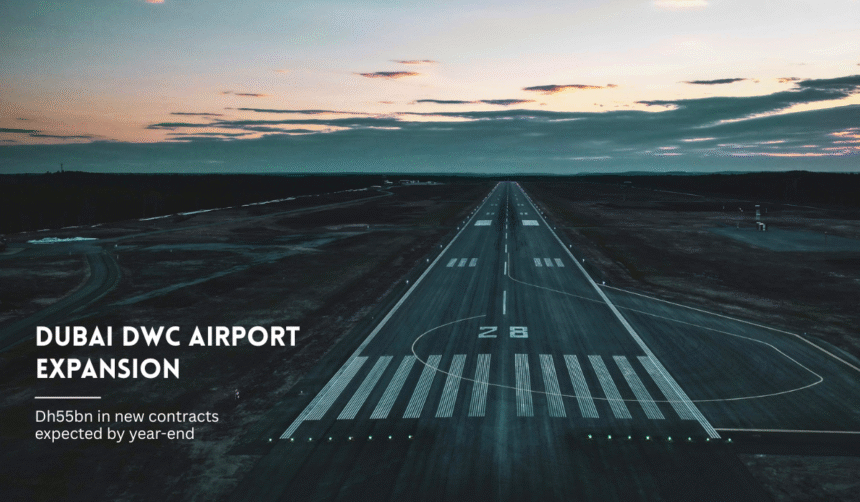
Dubai’s Al Maktoum International Airport is moving into a major new stage of development, with more than Dh55 billion in additional construction contracts expected to be awarded by the end of 2026.
Also known as Dubai World Central (DWC), the airport is at the heart of Dubai’s long-term aviation plans. The massive development is designed to handle the emirate’s growing passenger and cargo demand while strengthening its position as a global aviation and logistics hub.
Construction has picked up pace over the past 15 months, with major infrastructure work already under way. Around Dh13 billion worth of contracts are currently being executed, while the next wave of projects is expected to bring significantly more activity to the site.
Dh55 billion in new contracts
The upcoming contracts will cover some of the airport’s most important facilities and systems. These include work on the Western Passenger Terminal, the fourth aircraft concourse and the superstructure of the passenger terminal and the first three concourses.
Plans also include an Automated People Mover system, a new Baggage Handling System, southern airfield infrastructure, power-generation facilities and district cooling plants.
The scale of the construction is substantial. Long-span structural frameworks covering around 1.5 million square metres are among the projects planned as part of the wider development.
The latest construction figures also show how quickly work is progressing. More than 17,000 piles have already been installed, while excavation has passed 45 million cubic metres.
Construction gathers momentum
More than 10 million work hours have been completed during the current phase of construction. The project currently employs around 9,000 workers, with the workforce expected to grow considerably as more construction packages begin.
The second runway has also been completed, marking another important step in the airport’s development.
One of the major systems planned for the new airport is the Automated People Mover, which will help connect key passenger areas and improve movement across the enormous terminal complex.
The development is being designed around efficiency and scale, with technology and automated systems expected to play a major role in how passengers and aircraft move through the airport.
A major shift for Dubai aviation
Al Maktoum International is being built on a scale rarely seen in the aviation industry. Once fully developed, the airport is expected to handle up to 260 million passengers a year and around 12 million tonnes of air cargo annually.
The master plan includes five parallel runways, two passenger terminals and seven aircraft concourses, with more than 430 aircraft stands planned.
The airport is also expected to have strong road and rail connections, creating an integrated transport network around the aviation hub.
The first phase is scheduled to begin operations in 2032, but the wider development will continue well beyond that point. As work progresses, the project is expected to become increasingly important to Dubai’s future transport and economic plans.
What the project means for Dubai
The new airport is about more than increasing passenger capacity. Dubai sees Al Maktoum International as an important part of its future economic infrastructure.
A larger aviation hub can support tourism, international trade, logistics and investment while creating new opportunities across a wide range of industries.
The project is also expected to support Dubai’s wider economic ambitions by strengthening the emirate’s position as a global connection point between markets across Europe, Asia, Africa and the Middle East.
Eventually, operations are expected to shift from Dubai International Airport to Al Maktoum International. Until then, DXB will continue to serve millions of passengers while undergoing its own programme of improvements.
DXB upgrades continue
Dubai International Airport is also receiving upgrades to improve its facilities and maintain its capacity during the transition.
Work includes improvements to access routes, the Terminal 3 access bridge, airfield facilities, remote boarding areas and baggage-handling systems.
For passengers, that means Dubai will continue investing in its existing airport while simultaneously building a much larger aviation hub for the future.
The two developments will work alongside each other for years, allowing Dubai to maintain its position as a major international aviation centre while the new airport takes shape.
With Dh55 billion in additional contracts expected to be awarded by the end of 2026, Al Maktoum International is entering one of the most significant phases of its development.
The project will take years to complete, but the scale of work already under way shows how quickly Dubai is moving towards its vision for the next generation of global aviation. The coming construction milestones will offer a clearer picture of how the airport will transform the emirate’s aviation landscape.