





UAE highlights international regulatory cooperation as artificial intelligence transforms the global aviation industry
The United Arab Emirates has called for stronger international cooperation on artificial intelligence governance in civil aviation, stressing the need for clear regulations to ensure safe, transparent and responsible technology adoption.
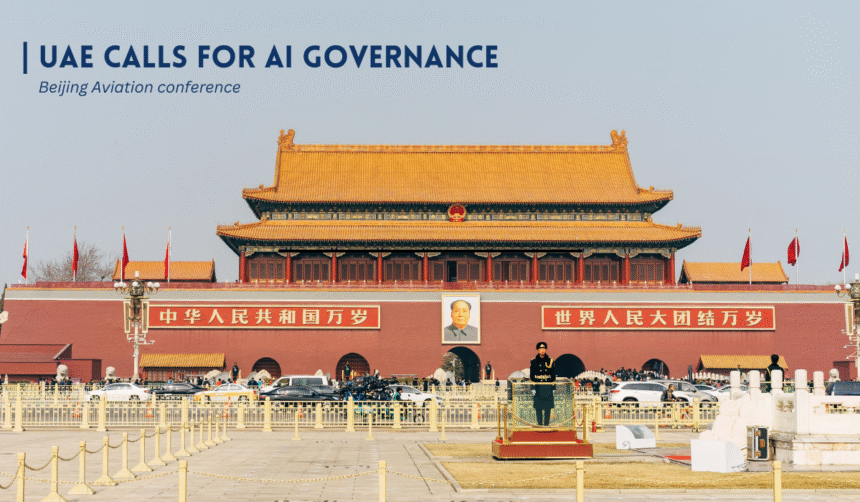
The remarks were made by Saif Mohammed Al Suwaidi, Director-General of the UAE’s General Civil Aviation Authority, during the 4th China Air Transport Association Conference, held in Beijing from September 17 to 19, 2026.
Themed “Integration and Development of Artificial Intelligence and Civil Aviation,” the conference brought together aviation stakeholders to examine the growing role of AI in the industry.
UAE stresses the importance of AI governance
Al Suwaidi said artificial intelligence could transform the entire aviation ecosystem, including regulation, airspace management, aircraft maintenance, passenger services and decision-making.
However, he emphasised that technological progress must be supported by effective governance and regulatory frameworks.
As airlines, airports and aviation authorities explore AI-powered systems, international coordination is becoming increasingly important. Consistent standards could help countries manage safety risks, improve transparency and support the responsible use of emerging technologies.
Al Suwaidi highlighted the need for greater alignment in the governance of artificial intelligence and its application across civil aviation.
His remarks underlined the importance of cooperation between regulators and industry stakeholders as AI becomes more integrated into aviation operations.
Strengthening UAE-China aviation ties
The UAE and China have developed strong aviation links, supported by more than 90 weekly flights connecting cities across both countries.
Al Suwaidi noted that the two nations are also cooperating in areas such as digital transformation, advanced air mobility and smart infrastructure.
These developments create opportunities for collaboration between aviation authorities, airlines, airports, technology companies and research institutions.
Potential areas of cooperation include joint research, regulatory testing, talent development and knowledge exchange. Such initiatives could help stakeholders assess new technologies while establishing practical safety standards.
For countries with extensive air connectivity, coordinated regulatory approaches could also support smoother operations and encourage the development of aviation technologies that can be used across different markets.
AI adoption must support aviation safety
The UAE’s participation in the conference focused on ensuring that artificial intelligence delivers meaningful benefits for the aviation sector.
Al Suwaidi said the success of AI adoption should be measured by its ability to make aviation safer, more efficient and more sustainable. He also highlighted its potential to simplify complex processes, identify risks early and improve operational performance.
In practical terms, AI could assist with aircraft maintenance, air traffic management, passenger services and operational decision-making. However, these applications require appropriate oversight, testing and accountability.
Clear governance can help determine how AI systems are assessed, how their recommendations are reviewed and how potential errors are managed.
For passengers, responsible implementation could support safer, more reliable and higher-quality travel experiences.
Bilateral meeting with Chinese aviation officials
During the conference, Al Suwaidi held a bilateral meeting with Pan Yixin, Secretary-General of the China Air Transport Association.
The meeting addressed ways to strengthen cooperation between the UAE and China in civil aviation and explore future opportunities in areas of shared interest.
The discussions formed part of the wider conference programme, which included dialogue sessions, specialised forums and a professional exhibition focused on artificial intelligence and aviation development.
More than 100 exhibitors showcased technologies and solutions covering different segments of the civil aviation value chain, including digital aviation, air logistics and professional education.
The exhibition offered participants an opportunity to examine emerging technologies and discuss their potential applications across the sector.
International cooperation remains central
The Beijing conference highlighted the aviation industry’s growing interest in artificial intelligence and digital transformation.
For the UAE, the event provided an opportunity to promote cooperation between countries and aviation stakeholders while emphasising the importance of safety and regulatory alignment.
As AI becomes more influential in aviation operations, authorities will need to balance innovation with effective oversight. International partnerships, shared research and consistent standards could play an important role in supporting this transition.
The UAE’s participation reflects its continued engagement with China and its broader focus on developing a safer, more efficient and technologically advanced aviation sector.