





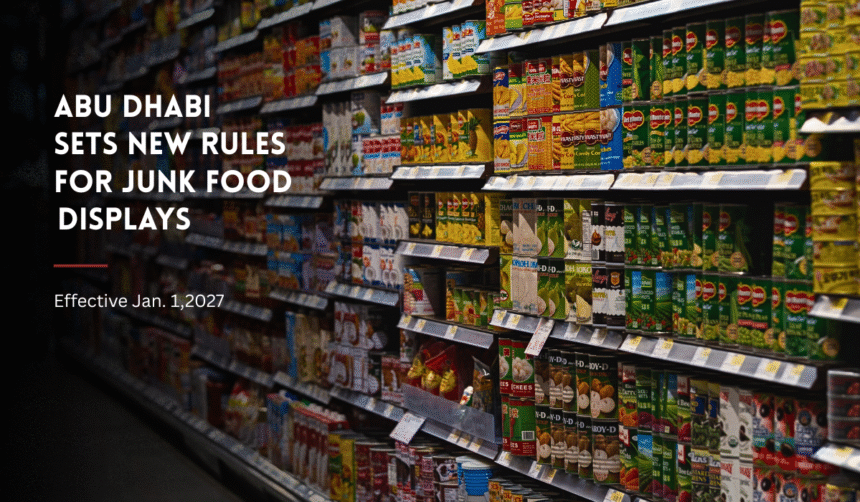
Abu Dhabi is set to transform the way supermarkets display unhealthy food as part of a major public health initiative aimed at encouraging healthier eating habits. From January 1, 2027 large supermarkets across the emirate will no longer be permitted to place junk food in high-visibility areas such as checkout counters, store entrances and end-of-aisle displays.
The policy was launched by Healthy Living in collaboration with the Abu Dhabi Registration Authority (ADRA). Rather than banning unhealthy products, it focuses on changing where they are displayed, making healthier choices more visible while allowing shoppers to continue purchasing the same products. The initiative aims to reduce impulse purchases by limiting the visibility of less nutritious foods instead of restricting their sale.
New Rules Target High-Fat, Salt and Sugar Products
The regulations apply to products classified as HFSS (High Fat, Salt and Sugar).
Under the new rules, supermarkets larger than 4,000 square feet must remove HFSS products from key promotional locations, including:
- Store entrances
- Checkout counters
- End-of-aisle displays
The requirements also extend to online grocery platforms, meaning unhealthy food products can no longer be prominently featured on homepages, search results, checkout pages or promotional pop-ups.
The products will still be available for purchase throughout stores. The only change is where they are displayed, encouraging customers to make more informed purchasing decisions while preserving their freedom of choice.
To ensure consistency, all HFSS products will be identified using the SEHHI nutrition criteria developed by the Abu Dhabi Public Health Centre, creating a unified standard for retailers across the emirate.
Policy Backed by Behavioural Science
Officials say the initiative is supported by behavioural science, which suggests shoppers are more likely to choose healthier products when nutritious options are placed in more prominent locations.
Dr Ahmed AlKhazraiji, Director of Healthy Living, said evidence from similar international initiatives has shown that changing product placement can positively influence purchasing decisions without restricting consumer choice.
He emphasised that the policy is designed to create healthier shopping environments while ensuring customers continue to have access to the products they prefer.
Meanwhile, Mohamed Munif Al Mansoori, Director General of ADRA, said the initiative reflects Abu Dhabi’s broader commitment to strengthening public health and enhancing retail standards across the emirate.
Carrefour Already Meets the New Standards
Some retailers have already taken steps to comply with the upcoming regulations.
Carrefour, operated by Majid Al Futtaim, has reorganised product displays across its Abu Dhabi stores ahead of the implementation deadline.
Ahmed Galal Ismail, Chief Executive Officer of Majid Al Futtaim Holding, said retailers have an important role to play in supporting healthier lifestyles and helping communities make better food choices through responsible product placement.
Authorities also confirmed they worked closely with retailers while developing the policy to ensure the new requirements are practical, achievable and aligned with international best practices.
Part of Abu Dhabi’s Wider Health Strategy
The supermarket display regulations form part of Abu Dhabi’s broader Healthy Living strategy, which includes initiatives to improve nutrition, strengthen school food standards and promote responsible food advertising.
The move follows recent commitments by Al Ain Farms Group to reduce sugar across its product range and builds on earlier measures aimed at limiting unhealthy food options in school canteens.
Several government entities collaborated on the initiative, including the Department of Health – Abu Dhabi, Abu Dhabi Public Health Centre, Abu Dhabi Registration Authority (ADRA), Abu Dhabi Quality and Conformity Council, and the Abu Dhabi Agriculture and Food Safety Authority.
Together, these organisations aim to create healthier food environments while preserving consumers’ freedom to choose the products they wish to buy.
What It Means for Shoppers
For most shoppers, supermarket visits will remain largely the same. The biggest difference is that unhealthy snacks and sugary products will no longer occupy the most prominent locations designed to encourage impulse purchases.
Customers will still be able to purchase their favourite products, but they may need to look beyond checkout counters, store entrances and end-of-aisle displays to find them.
With the January 1, 2027 deadline approaching, more supermarket chains are expected to introduce similar changes over the coming months as Abu Dhabi continues its efforts to build healthier communities through practical, evidence-based public health policies.